
Beyond the Myths: Unveiling the Rich History of the Great Wall PLUS Fun Facts!

Quick answer: The Great Wall of China stretches 21,196.18 km (13,170.70 miles) across 15 northern regions, was built across more than nine dynasties over roughly 2,000 years (with the best-preserved sections dating to the Ming dynasty, 1369-1644), and was designated a UNESCO World Heritage Site in 1987. It is not visible from space with the naked eye, and roughly 30% of the Ming-era wall has been lost to erosion and human damage. The most popular sections to visit from Beijing are Mutianyu, Badaling, Jinshanling, Jiankou, Simatai and Shanhai Pass.
Hey there, adventurers!
Are you ready to take a journey to one of the most incredible wonders of the world? That’s right, we’re talking about the Great Wall of China!
This massive architectural masterpiece spans over 13,000 miles and is a must-see for anyone visiting China.
Whether you’re a tourist, spending a semester studying in China, interning, or moving to China permanently, visiting the Great Wall of China is something everybody has to tick off their bucket list.
But did you know that there are some wild and wacky facts about the Great Wall that will blow your mind?
Get ready for a thrilling ride as we explore the fun and quirky side of the Great Wall of China. We’ll even tell you everything you need to know about visiting the Great Wall in person!
Great Wall of China Facts长城 (Cháng Chéng): A Short History
Great Wall of China Facts: The Legend of Meng Jiangnu
Great Wall of China Facts: Where is the Great Wall of China located?
Great Wall of China Facts: How long is the Great Wall of China?
21,196 kilometers (13,170 miles)
Great Wall of China Facts: How long does it take to walk the Great Wall?
Great Wall of China Facts: Can you see the Great Wall from space?
Great Wall of China Facts: UNESCO World Heritage Status
Great Wall of China Facts: Visitor Numbers & Preservation
Great Wall of China Facts: Entrance Fee
Great Wall of China Facts: Which section should I visit?

Great Wall of China Facts长城 (Cháng Chéng): A Short History
Before we get into the history, here is a question we get asked a lot: why is it called the Great Wall? The name comes directly from the Chinese: 长城 (Cháng Chéng), which translates literally as ‘long wall’ or ‘long fortress’. Western visitors adopted the word ‘great’ to convey both its physical scale and its cultural significance. In China, the name has always kept it simpler, and honestly, ‘long wall’ does the job pretty well when you consider it stretches further than half the Earth’s circumference.
The Great Wall was built over a number of years, and went through the hands of many emperors.
Here is something that surprises most visitors: construction did not begin with Emperor Qin Shi Huang. Initial walls were being built as far back as the 7th century BC during the Warring States period (771-476 BC), when individual Chinese states built their own separate walls to defend against each other and northern nomadic groups. When Qin Shi Huang unified China (221-206 BC), he connected and extended many of those existing walls into something more continuous. He did not start from scratch; he scaled up what was already there.
It was built to protect against those coming in from Inner and Central Asia. But the wall was more than just a barrier. The watchtowers and beacon towers built along its length formed one of the ancient world’s most sophisticated early-warning systems. Soldiers would light smoke signals by day and fire by night to pass military messages rapidly across hundreds of kilometres. Signals could travel the full length of a garrison line in a matter of hours.
The building of the wall was passed through various dynasties, each with their own construction methods, as well as coverage area.
In total, more than nine dynasties contributed to building, extending, or repairing the wall over roughly 2,000 years. These include Han (202BC-220AD), Northern Qi (550-574), Sui (589-618), and Ming (1369-1644), among others. The wall was rebuilt and reconstructed several times across those dynasties, but the most extensive and best-preserved stretches you can visit today were built during the Ming dynasty.
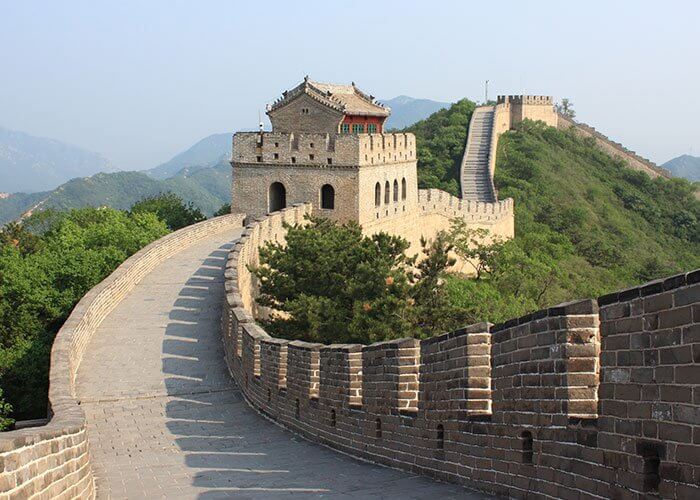
The construction of the wall itself is one of mankind’s greatest achievements and demonstration of immense manpower.
Workers were brought in from all backgrounds.
The materials used to build the wall changed across the dynasties too. Early sections used rammed earth and wood. By the Ming dynasty, kiln-fired bricks became the dominant material. One of the most remarkable construction secrets? Builders used a mortar made from glutinous rice flour mixed with slaked lime. That sticky rice mortar turned out to be incredibly durable, and sections held together by it have survived to this day. 💡
The workforce was enormous and drawn from across society: soldiers, peasants, convicts, and prisoners of war were all conscripted to build the wall at various points in history. Some estimates suggest that during the Qin dynasty alone, up to 300,000 soldiers and hundreds of thousands of peasants were put to work on the wall.
Construction over the many years and dynasties was carried out under a variety of conditions and management. Working conditions were often very harsh, leading to frequent injury and deaths at the wall. Historians estimate that more than one million people died during the construction of the Great Wall across all dynasties. Many workers were buried within or alongside the wall itself, which is why some historians have called it the longest cemetery in the world.

Great Wall of China Map | 10 Best Sections to Visit
Great Wall of China Map || 10 Best Sections to Visit The Great Wall of China is steeped in vast amounts of history and is one of the most interesting and diverse places to visit. It stretches across miles and…
Great Wall of China Facts: The Legend of Meng Jiangnu
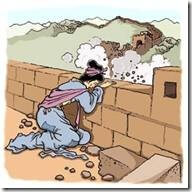
Whether this belongs to Great Wall of China facts or remains just a story, the story of Meng Jiangnu is one of the most famous legends from the wall.
She was the wife of a worker who was forced to go to the wall to aid with construction.
After missing and worrying about her husband so much, she went to go and see him at the wall, only then learning that he had passed away during construction.
He had been a solid rock for many of the workers and his fellow workers greatly respected him, so they buried his bones within the wall.

Museums in Beijing || 14 Fascinating Museums (for 2025)
The 14 Best Museums in Beijing – Museums are great way to learn more about China and Chinese culture, and as many of them are free what’s stopping you!?
As a result, she cried over the stretch of wall he was buried for 3 days and 3 nights, until the wall crumbled away.
The King at the time then heard about this, and wanted to punish Meng for her damage to the wall.
However, upon seeing the beautiful woman he fell in love and asked her for her hand in marriage.
Understandably, Meng was incredibly angry about this having just cried her eyes out for the past 3 days, however, she agreed, but on the terms of 3 conditions.
- 1. Find the bones of her husband.
- 2. Hold a state funeral for him.
- 3. Have Emperor Qin attend his funeral in person.
All of these conditions were met, and the King began excitedly preparing for the wedding. However, Meng Jiangnu had different plans. She took the bones of her husband and jumped into the sea to her death.
Today, people visit the Temple of Meng Jiangnu at the foot of the Great Wall.
Whilst you’re in Beijing, don’t forget to visit the beautiful Temple of Heaven too!
Great Wall of China Facts: Where is the Great Wall of China located?
As you may have guessed, the Great Wall of China is pretty long.
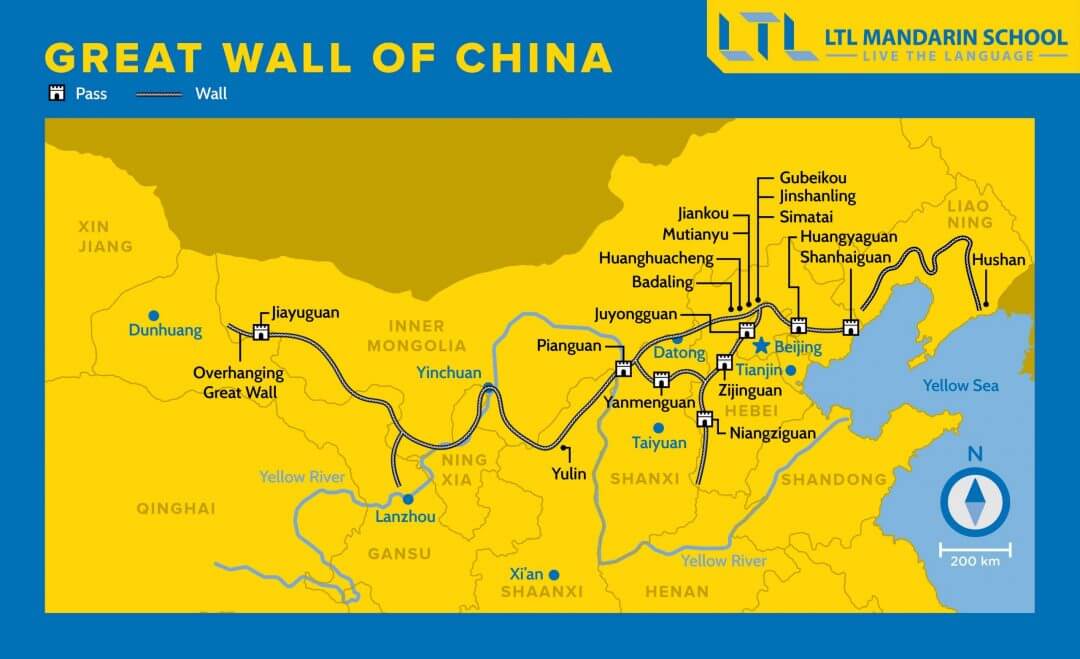
It stretches over 15 regions in the Northern part of China, running from the mountains and deserts of the northwest all the way to the Bohai Sea in the east. In fact, the eastern terminus at Shanhaiguan is known as where the Wall meets the sea, a dramatic and often overlooked end point that is well worth adding to your itinerary.
These regions include; Heilongjiang, Jilin, Liaoning, Inner Mongolia, Beijing, Tianjin, Hebei, Shandong, Henan, Shanxi, Shaanxi, Gansu, Ningxia, Qinghai, and Xinjiang.
The most popular place to visit it from is from the capital city of Beijing, where there is about 526 kilometers (327 miles) of the wall to visit. Not sure which section to head to first? Check out our guide to the 10 best sections to visit to find the right stretch for your schedule and fitness level.
Great Wall of China Facts: How long is the Great Wall of China?
21,196 kilometers (13,170 miles)
In 2012, the State Administration of Cultural Relics announced that the total length of the Great Wall of China today is 21,196.18 km (13,170.70 miles). To put that into perspective, that is roughly half the circumference of the Earth. Let that sink in for a moment. 🤔
Contrary to popular belief, however, the structure is not a single line and is broken up into many different parts. In some parts, two parts of the wall even run parallel to themselves.
There are even areas where you will find three lines of the wall all together!

Where Does the Great Wall of China End?
Discover the Ancient Marvel of Laolongtou: China’s Legendary Dragon Head When you come to China, the Great Wall – built to protect China from raids and conquerors – is something you simply have to visit. There are many sections to…
Great Wall of China Facts: How long does it take to walk the Great Wall?
A question we hear a lot: how long does it take to walk the Great Wall of China? The honest answer is that nobody walks the whole thing. At over 21,000 km, a full end-to-end walk would take well over a year of non-stop walking.
For visitors, the realistic question is how long a section takes. A popular day hike at Mutianyu or Badaling typically takes 2-4 hours. More adventurous hikers tackle the Jiankou to Mutianyu route, which is around 10 km and takes 4-6 hours. If you want a proper multi-day trek, sections near Gubeikou or Jinshanling offer overnight hiking experiences.
TIP💡 Always check current access conditions and seasonal closures before heading out, especially in winter.
Great Wall of China Facts: Can you see the Great Wall from space?
Contrary to popular belief, the Great Wall of China is not visible from space with the naked eye.
The idea that it is visible from space originated in the early 20th century and gained widespread acceptance, but it was later disproven.
While the wall is an impressive feat of engineering and one of the most recognizable landmarks in the world, it is simply too narrow and blends too much into the surrounding terrain to be visible from space without the aid of magnification.
Oh well, the wall may not be greatly visible, but it’s still Great!

Great Wall of China Facts: UNESCO World Heritage Status
One important milestone worth knowing: the Great Wall of China was designated a UNESCO World Heritage Site in 1987. That designation recognised the wall not just as a military structure, but as an extraordinary example of human cultural and architectural achievement.
Great Wall of China Facts: Visitor Numbers & Preservation
The Great Wall attracts more than 10 million visitors every year, making it one of the most visited historical sites on the planet. That popularity comes with a cost. Today, researchers estimate that roughly 30% of the Ming-era wall has disappeared due to erosion, tourism pressure, and historical removal of bricks. Conservation efforts are ongoing, but some sections remain at serious risk.
Great Wall of China Facts: Entrance Fee
The Great Wall of China spreads throughout the country and is a very important part of Chinese heritage.
In some parts, there are entrance fees you need to pay. However, this will only be a small amount and is not in all locations.
Generally, the main thing you’ll need to spend money on is travel to the wall.
From Beijing, you can easily get to some of the more popular spots, even just via local public transport! To get to the more remote locations you’ll have to join a tour, get a taxi or hire a private driver.

Beijing Metro Map: Discover all 490 Stations and 27 Lines
In this guide, we’ll tell you everything you need to know about all 27 lines, which ones to take for famous sites, how to buy tickets and travel tips.
Great Wall of China Facts: Which section should I visit?
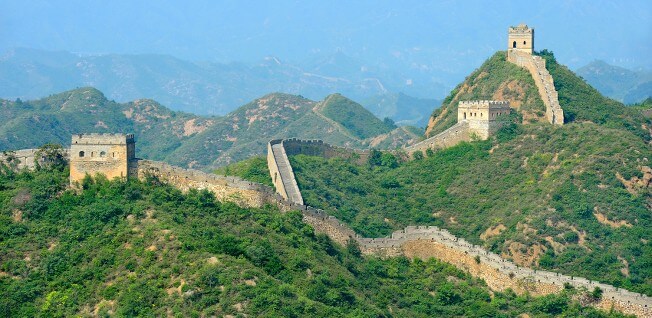
Now you’re all clued up on the history and geography of the wall, you’re ready to pay it a visit. The next big question you have to face is… Where do you visit?
The wall is split up into many parts, but the most visited parts of the wall are in China’s capital, Beijing.
Here you can find the most popular places of the wall to visit, each with their own perks. This includes;
- Mutianyu
Most popular section of the wall to visit for foreigners
- Badaling
The most popular section to visit for Chinese tourists
- Jinshanling
Popular hiking route
- Jiankou
For those that want a challenge
- Simatai
Open for night tours
- Shanhai Pass
Where the Great Wall runs into the sea
As an alternative, how about combining study and a visit to the Great Wall? Spend a summer living and studying next to one of the untouched sections of one of the World’s wonders, whilst you learn the Chinese language!
Great Wall of China – 20 Fun Facts!

- The Great Wall was built over a period of more than 2,000 years, from the 7th century BC to the 17th century AD.
- The Great Wall is not a single wall but a series of walls and fortifications built by different Chinese dynasties.
- The Great Wall was originally built to protect China from invading armies from the north.
- The wall is up to 30 feet tall and 15-25 feet wide.
- The wall was designated as a UNESCO World Heritage site in 1987.
- The Great Wall is made of a variety of materials, including brick, tamped earth, stone, and wood.
- The Great Wall was once patrolled by soldiers and used as a communication system.
- The wall includes many towers, battlements, and watchtowers.
- The Great Wall was also used as a means of controlling trade and immigration.
- The wall has inspired many stories and legends, including the tale of the wall being built by a dragon.
- The Great Wall was never conquered by force.
- Some sections of the Great Wall have been damaged or destroyed by natural disasters and human activity.
- There are more than 10,000 watchtowers along the wall.
- Some sections of the wall are made of ice and are known as the Ice Wall.
- The areas around The Great Wall are also home to many species of plants and animals, including the endangered giant panda.
- The Great Wall is said to be haunted by the ghosts of soldiers who died during its construction.
- It’s estimated that the Great Wall cost over $360 billion to build in today’s currency.
- Some sections of the Great Wall are so steep that they are known as “heavenly ladders.”
- The Great Wall was built using a special type of mortar made from rice flour.
- The Great Wall is not a straight line but has many twists and turns.
9 Travel Tips for Beijing 🧳 – A Useful List for 2025
With long history, rich culture and nice people, Beijing is a city which deserves several days of your time.
Great Wall of China – FAQ’s
How long is the Great Wall of China?
The Great Wall of China totals 21,196 kilometers (13,170 miles)
When was the Great Wall of China built?
It is estimated that initial building began in 771-476BC through to 221-206BC when Emperor Qin Shi Huang came to power during the Qin dynasty.
How many provinces does the Great Wall cross through?
The Great Wall passes through a total of 15 provinces. Those include: Heilongjiang, Jilin, Liaoning, Inner Mongolia, Beijing, Tianjin, Hebei, Shandong, Henan, Shanxi, Shaanxi, Gansu, Ningxia, Qinghai and Xinjiang.
Can you see The Great Wall from space?
Contrary to popular belief, the Great Wall of China is not visible from space with the naked eye. It is simply too narrow and blends too much into the surrounding terrain to be visible from space without the aid of magnification.
What are 5 quick facts about the Great Wall of China?
Here are five to start with: (1) The wall stretches 21,196.18 km, roughly half the circumference of the Earth. (2) It was built across more than nine dynasties over approximately 2,000 years. (3) Builders in the Ming dynasty used a mortar made from glutinous rice flour, which proved remarkably durable. (4) The wall was designated a UNESCO World Heritage Site in 1987. (5) More than one million people are estimated to have died during its construction.
How much of the Great Wall of China is left?
Approximately 30% of the Ming-era Great Wall remains in reasonable condition. Erosion, tourism pressure, vegetation growth, and the removal of bricks during the Cultural Revolution (1966-1976) have all taken their toll. Some sections have completely disappeared, while others, such as those at Mutianyu and Jinshanling, are well-preserved and fully accessible to visitors.
What are 10 interesting facts about China you can connect to the Great Wall?
The wall touches on some of China’s biggest historical themes: (1) China has one of the world’s longest recorded continuous civilisations. (2) The Qin dynasty (221-206 BC) created the first unified Chinese state and the foundation for the wall we recognise today. (3) The Silk Road trade routes ran parallel to parts of the Great Wall, which helped protect those trade corridors. (4) China’s dynasties each left their own architectural fingerprint on the wall. (5) The wall is referenced in Chinese literature, poetry and idiom going back thousands of years. (6) Chinese characters for the wall, 长城 (Cháng Chéng), literally mean ‘long wall’. (7) Beijing, China’s capital, sits close to the best-preserved Ming-era sections. (8) The wall was a critical defensive line against northern nomadic groups such as the Xiongnu and later the Mongols. (9) Modern China treats the wall as a national symbol and it appears on official emblems and currency. (10) The wall is now one of China’s most visited heritage sites, with more than 10 million visitors a year.
Want more from LTL?
If you wish to hear more from LTL Mandarin School why not join our mailing list?
We give plenty of handy information on learning Chinese, useful apps to learn the language and everything going on at our LTL schools.
Sign up below and become part of our ever-growing community.
BONUS | Learn Chinese with LTL in person. Our student community is growing by the week.
⭐ Download our free ebook, your starter pack of essential Mandarin learning resources!







2 comments
[…] Great Wall of China is steeped in vast amounts of history, and is one of the most interesting and diverse places to visit. It stretches across miles and […]
[…] The first of our World Heritage Sites in China of course has to be the Great Wall. […]